
Michigan hate is one of the internet’s stranger hobbies.
Spend enough time on Reddit threads, state-ranking articles, comment sections, or “best and worst places to live” lists, and you will eventually run into the same familiar shots: the roads are terrible, the weather is depressing, Detroit is dangerous, car insurance costs too much, the schools are struggling, and the economy feels like it has been trying to “come back” for about 40 years.
Some of that criticism is exaggerated. Some of it is outdated. Some of it, if we are being honest, is painfully fair.
That is what makes Michigan such an interesting target. It is not a state locals can defend by pretending everything is perfect. Michigan has potholes big enough to name, winters that can humble anyone, and public policy problems that deserve serious attention. But the leap from “Michigan has problems” to “Michigan is the worst state” is where locals start rolling their eyes.
Because for every online critic calling Michigan a frozen pothole with lakes, there is someone who knows what it feels like to watch the sun set over Lake Michigan, spend a summer weekend up north, drive through fall color in the Upper Peninsula, tailgate in Ann Arbor or East Lansing, catch a Tigers game downtown, or live somewhere where freshwater is not a luxury.
So why do people think Michigan is the worst state? Let’s take the complaints seriously and then let locals answer back.
The Rankings Give Michigan Haters Plenty to Work With
The internet loves a ranking, and Michigan does not always come out looking great.
In U.S. News & World Report’s 2025 “Best States” rankings, Michigan placed No. 43 overall. The state ranked especially low in education, infrastructure, crime and corrections, economy, and fiscal stability. In that ranking, Michigan was listed at No. 45 for education and No. 44 for infrastructure.
That is the kind of number that gets shared without context. “Michigan is 43rd” becomes “Michigan is trash,” and the internet moves on.
But rankings depend heavily on what they measure and how they weight each category. WalletHub’s 2026 “Best States to Live In” ranking placed Michigan at No. 30 overall, which is not exactly a victory parade, but it is also not “worst state” territory. In that same ranking, Michigan performed much better in affordability, where it ranked No. 12, and quality of life, where it ranked No. 13.
That contrast matters. Michigan can look bad in one ranking and more middle-of-the-pack in another because the state is full of contradictions. It has serious infrastructure and education challenges, but it also has a relatively affordable housing market, major natural assets, and a lifestyle that does not always show up cleanly in a spreadsheet.
The local rebuttal is not, “The rankings are fake.” It is more like: rankings are useful, but they are not the whole story.
Complaint #1: “The Roads Are Terrible”
Let’s start with the complaint no Michigander can honestly dodge.
The roads are bad.
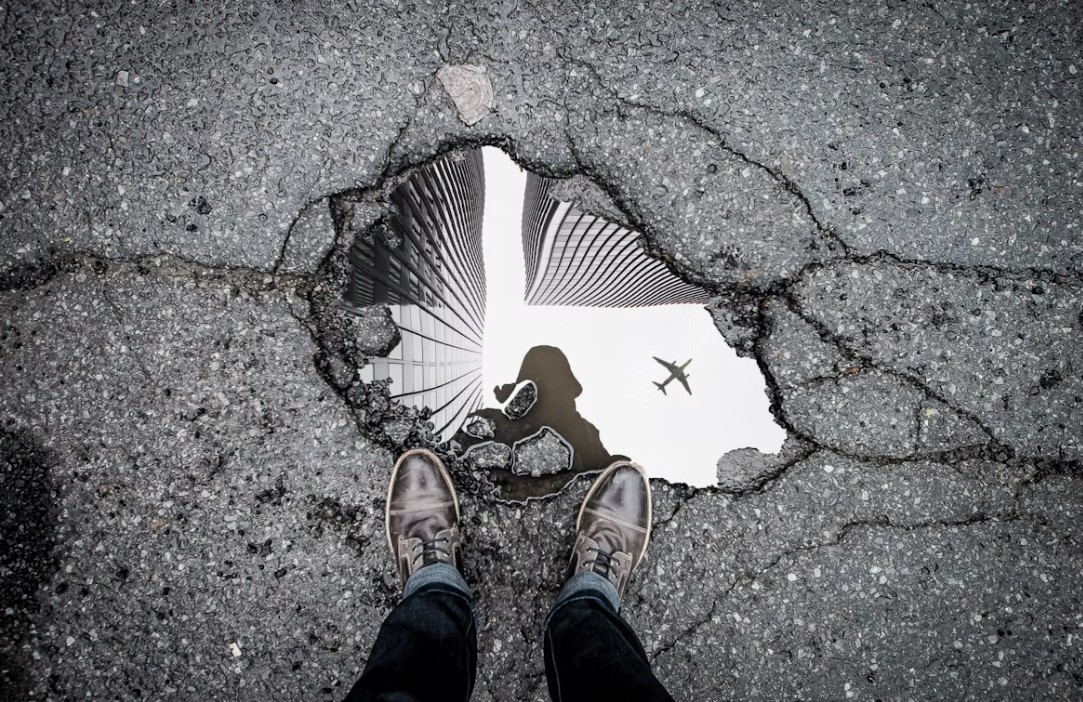
Michigan’s potholes are not just a meme; they are a lived experience. You do not need a national study to know that a February drive through Metro Detroit, Grand Rapids, Lansing, Flint, or Kalamazoo can feel like an obstacle course.
The data backs up the frustration. A 2025 analysis from the Citizens Research Council of Michigan ranked the state 40th for overall road system condition, using metrics tied to pavement and bridge conditions from federal data. The same analysis noted Michigan ranked near the bottom for several road-condition measures, including poor-condition Interstate and non-Interstate National Highway System pavement.
This is one of the reasons Michigan gets roasted so easily. Bad roads are visible. They are daily. They hit your tires, your alignment, your commute, and your mood.
But here is the local rebuttal: Michigan’s road problem is real, but it is not a personality trait. It is an infrastructure problem. It is tied to weather, funding, heavy vehicle traffic, freeze-thaw cycles, deferred maintenance, and decades of political kicking-the-can-down-the-road. That does not make it acceptable, but it does make it fixable.
Locals are not defending the potholes. They are saying you cannot reduce an entire state to the worst lane on I-94. And, despite the many real issues, a lot of the major roadways have been getting more attention lately. Despite most residents’ general aversion to “orange barrel season,” as Bryan Funke so eloquently put it, “I’m actually happy when I see construction.”
Complaint #2: “The Weather Is Miserable”
This is where Michigan loses a lot of people.
The winter can be long. The skies can be gray. The wind can be rude. And in parts of the state, snow is not just “winter weather.” It is a lifestyle.
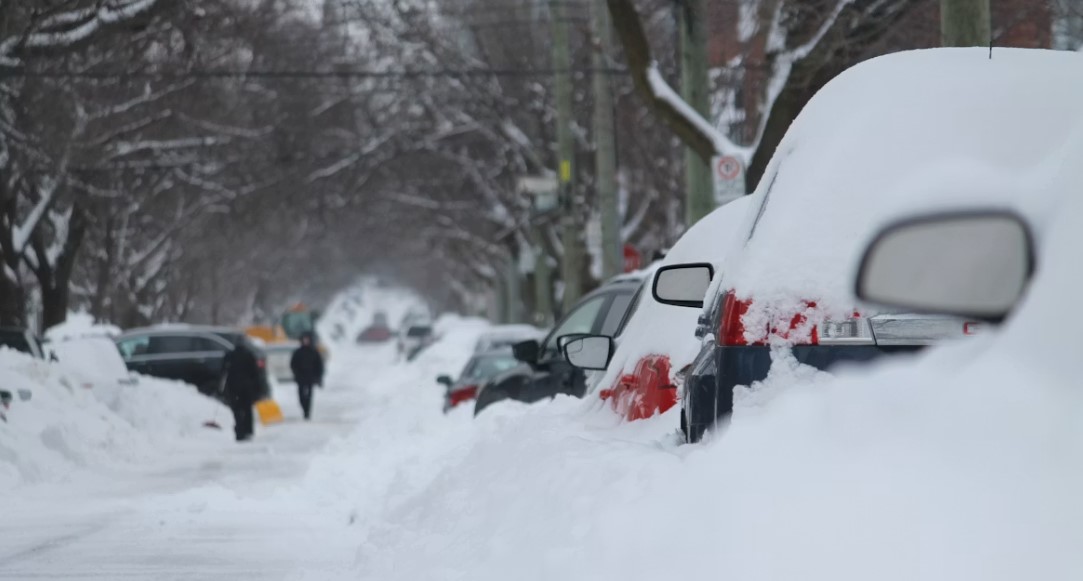
The Great Lakes play a major role in that. According to the Great Lakes Integrated Sciences and Assessments program at the University of Michigan, cold air passing over the relatively warmer Great Lakes creates lake-effect snow, especially in late fall and winter. The Upper Peninsula includes some of the largest snowbelts in the eastern United States, with some areas receiving more than 250 inches of snow per year. Western and northwestern Lower Michigan can also see heavy lake-effect snowfall.
So yes, if someone moves to Michigan expecting a mild winter, they may feel personally attacked by February.
But this complaint also reveals a divide between people who endure Michigan and people who understand Michigan. Locals know winter is part of the trade. You get the gray, the slush, the salt, and the “why do I live here?” mornings. But you also get real seasons, frozen lakes, ski weekends, snowmobiling, cozy small towns, and the emotional reward of the first 50-degree day in March when everyone acts like it is a national holiday.
Michigan’s Rod B. responded to this criticism on Facebook with a thought out response, “While we may get three to four months of snow, most of the time it’s enjoyable and you can be sledding and skiing and snowmobiling and taking advantage of it. The people that don’t have the Michigan thick skin shy away from this and are scared of it. We here in Michigan embrace it.”
Michigan’s weather is not for everyone. That is fair. But for many locals, the seasons are not a drawback — they are part of the state’s rhythm.
Complaint #3: “Car Insurance Is Outrageous”
This one is also fair.
Michigan has long had a reputation for expensive auto insurance, and even after reforms, the state remains costly for many drivers. Experian reported in 2026 that the average cost of car insurance in Michigan was about $2,752 per year, or roughly $229 per month, based on its May 2026 data. Full coverage averaged even higher.
Part of the issue is Michigan’s insurance structure. The state’s no-fault system and personal injury protection requirements have historically contributed to high premiums. Experian notes that Michigan’s high minimum coverage requirements and PIP rules are part of what pushes costs up.
There has been progress. The Michigan Department of Insurance and Financial Services reported that the 2019 auto insurance reform produced average savings of about $357 per vehicle, with larger average savings in Wayne County. The same report found that the gap between Michigan’s uninsured-driver rate and the national average narrowed after reforms.
Still, “better than it used to be” is not the same as cheap. For many Michigan residents, auto insurance is one of the easiest reasons to complain about living here.
The local rebuttal is simple: this criticism is valid. But it is a policy problem, not proof that Michigan is uniquely unlivable. It is something residents have pushed to reform, and it remains one of the clearest examples of how Michigan can be both affordable in some ways and frustratingly expensive in others.
Complaint #4: “Detroit Defines the Whole State”
No discussion of Michigan hate is complete without Detroit.
For decades, outsiders have used Detroit as shorthand for every negative thing they think about Michigan: crime, decline, abandonment, corruption, poverty, and urban struggle. In the laziest version of the stereotype, the entire state gets flattened into an old ruin-porn photo of an abandoned building.
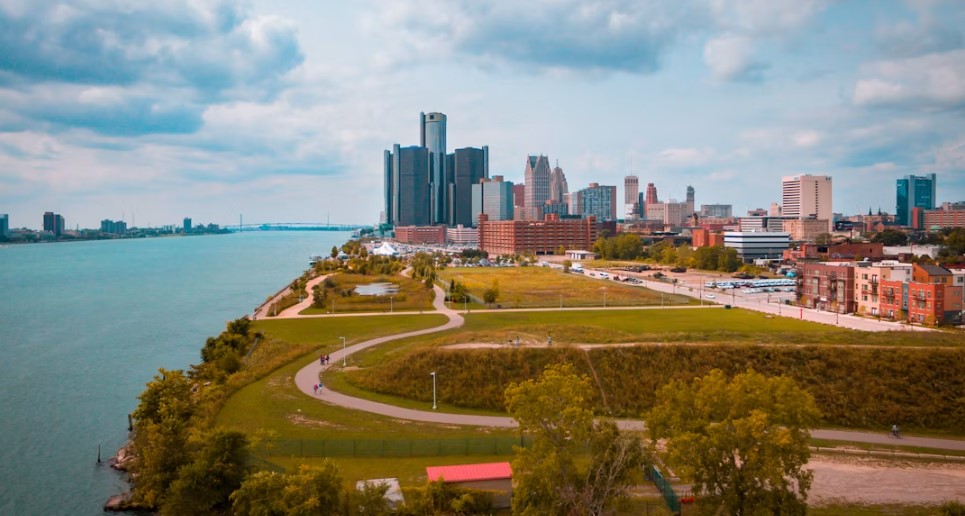
This is unfair to Detroit, and it is unfair to Michigan.
That does not mean Detroit has not faced serious challenges. It has. But the story people repeat is often years behind the reality on the ground. Detroit reported major public safety improvements in 2024, including the city’s fewest homicides since 1965. The city said homicides fell 19 percent from 2023 to 2024, while non-fatal shootings dropped 25 percent.
That does not erase every concern, and it does not mean every neighborhood has the same experience. But it does show why the old “Detroit is hopeless” narrative is stale.
Locals also know something outsiders often miss: Detroit is not just a statistic. It is music, food, architecture, sports, history, entrepreneurship, neighborhoods, labor, art, and culture. It is one of the most important American cities of the last century. Reducing it to a punchline says more about the person making the joke than it does about Detroit.
And Michigan is bigger than Detroit, too.
“People think they know Michigan because they know Detroit. Then they see Traverse City, Sleeping Bear Dunes, Leelanau County, and miles of unsalted coastline and realize our state’s best kept secret has been hiding in plain sight all along.” – Jammie Kay via Facebook.
The state includes beach towns, farm communities, college towns, forests, islands, suburbs, industrial cities, resort areas, and the entire Upper Peninsula. If someone thinks they understand Michigan because they watched one documentary about Detroit from 2010, they do not understand Michigan.
Complaint #5: “The Schools Are Struggling”
This is one of the more serious criticisms, and it deserves a serious answer.
Michigan’s education rankings and test scores have been a concern for years. Bridge Michigan reported that 2024 national test results showed Michigan fourth- and eighth-graders lagging behind national averages. In 2024, only 24 percent of Michigan fourth-graders were proficient in reading, compared with 30 percent nationally. In math, 37 percent of Michigan fourth-graders were proficient, compared with 40 percent nationally.
That is not something to wave away with local pride. If anything, locals should be the first to say Michigan’s students deserve better.
But this is also where the “worst state” conversation gets shallow. A state can have real education problems without being written off. The useful response is not denial. It is urgency.
Locals can love Michigan and still demand stronger schools, better funding decisions, more support for teachers, improved literacy, and more consistent outcomes across districts. Defending Michigan does not mean pretending every criticism is wrong. Sometimes the best defense is admitting the problem and insisting the state is worth investing in.
Complaint #6: “Michigan Feels Economically Stuck”
Michigan’s economy has an old reputation problem.
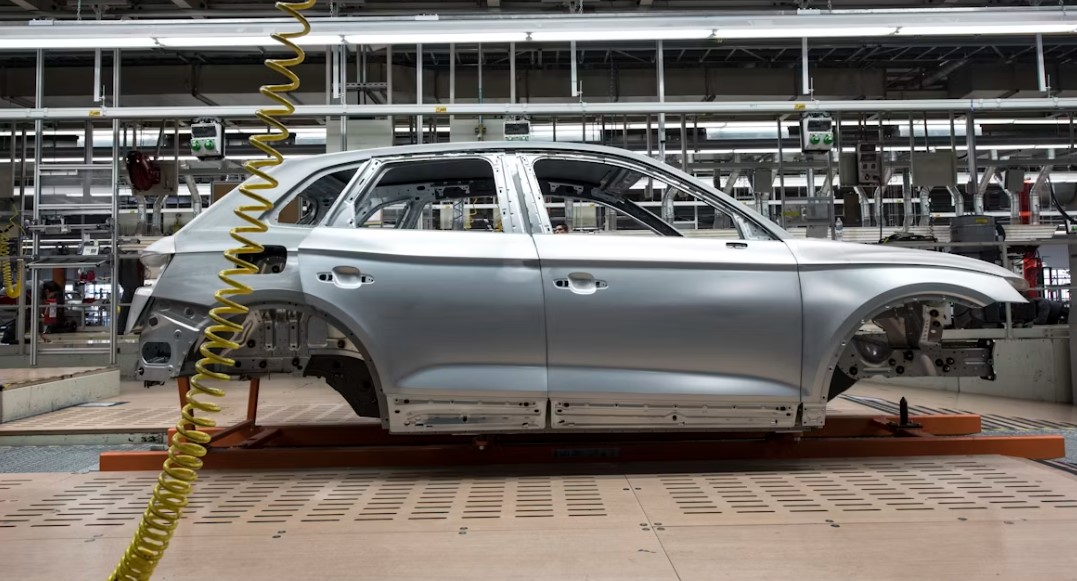
To some outsiders, the state is still defined by factory closures, population stagnation, and the decline of the auto industry’s golden age. And there are real reasons why that perception sticks. In WalletHub’s 2026 livability ranking, Michigan ranked 46th for economy, even while performing much better in affordability and quality of life.
Population trends also show a state that is growing slowly. Michigan’s Center for Data and Analytics estimated the state’s population at about 10.13 million as of July 1, 2025, up 0.3 percent from the previous year. The state added population from 2024 to 2025, but its long-term growth has lagged the nation.
So yes, Michigan has economic challenges. Some communities have been hit hard by industrial change. Some young people leave. Some regions are still trying to figure out what the next version of their economy looks like.
But the “Michigan is dead” take is lazy.
Michigan remains home to major employers and globally recognized companies. The Michigan Economic Development Corporation notes that the state is home to 15 companies on the 2025 Fortune 500 list, and Grand Rapids in particular reported 33.3% growth in private businesses from 2013-2023.
Tourism is also a major economic force. In 2024, Michigan tourism generated an estimated $54.8 billion in economic impact, supported more than 351,000 jobs, and drew about 131.2 million visitors, according to the Michigan Economic Development Corporation.
That is the contradiction again. Michigan is not booming everywhere. It has regions that need investment, industries in transition, and a growth problem it cannot ignore. But it also has manufacturing strength, research universities, tourism, agriculture, freshwater, logistics, health care, small businesses, and communities where people can still build a good life without coastal-state prices.
Complaint #7: “It’s Not as Cheap as People Think”
Michigan often gets sold as affordable, and compared with many states, it is. But locals know the bills still add up.
Car insurance can be high. Property taxes can sting depending on where you live. Heating bills are real. Groceries are not magically cheap just because you live near a lake. And in desirable areas — Ann Arbor, Traverse City, Grand Rapids, Birmingham, parts of the lakeshore — housing can feel very expensive relative to local wages.

Still, on broad cost-of-living measures, Michigan remains below the national average. The Missouri Economic Research and Information Center ranked Michigan No. 22 for lowest cost of living in the first quarter of 2026, with an overall cost-of-living index of 93.9, compared with the national baseline of 100. Michigan’s housing index was also below the national average.
WalletHub’s 2026 ranking also placed Michigan No. 12 for affordability and listed the state among the highest for homeownership rate.
Tax burden is more mixed, but Michigan is not the national outlier many people assume. WalletHub’s 2026 tax burden analysis ranked Michigan No. 32 among states where No. 1 had the highest tax burden.
The local answer here is nuanced: Michigan is not dirt cheap, and some costs are genuinely frustrating. But compared with many parts of the country, especially large coastal metros, Michigan still offers a realistic path to homeownership, space, and a middle-class lifestyle.
What the Internet Misses About Michigan
The anti-Michigan argument usually focuses on things that are easy to complain about: roads, winter, rankings, crime narratives, insurance bills.
What it misses is the part locals actually live for.
Michigan is surrounded by four of the five Great Lakes and has the longest freshwater coastline in the United States, with about 3,288 miles of Great Lakes shoreline, according to the Michigan Department of Environment, Great Lakes, and Energy.
That is not a small lifestyle detail. It shapes the entire state.
It means summer beach towns. It means dunes, lighthouses, fishing, boating, kayaking, islands, harbors, and sunsets that make people pull over on the side of the road. It means you can grow up with freshwater as part of your identity.
Michigan also has a huge state park system. The Michigan Department of Natural Resources lists 103 state parks, offering everything from swimming and boating to hiking, fishing, camping, and winter recreation.
That is the stuff rankings struggle to capture.
They do not measure the first weekend it feels warm enough to open the windows. They do not measure the emotional importance of “going up north.” They do not measure a cider mill in October, a Friday fish fry, a two-track road in the UP, a Tigers game with your dad, a Lake Superior rock in your pocket, or the way people from Michigan can complain about the state for 20 straight minutes and then get personally offended when someone from Ohio does it.
Michigan locals are allowed to criticize Michigan. That is basically a state pastime.
But outsiders calling it the worst? That is different. Years back we polled ex-pats on things they missed the most, and we got a lot of answers!
So, Is Michigan the Worst State?
No. But it is an easy state to roast because its problems are visible.
The roads are visibly rough. The winters are visibly long. Detroit’s struggles have been visibly documented. Insurance bills are painfully visible in monthly budgets. Education and economic rankings give critics real numbers to point to.
But “worst state” is not a serious conclusion. It is an internet shortcut.
Michigan is a state with real issues and real advantages. It is affordable in ways many states are not. It has freshwater resources other states would love to have. It has major cities, small towns, forests, farms, beaches, universities, sports, industry, and a sense of place that people carry with them long after they leave.
The honest local answer is this:
Michigan does not need a perfect defense. It needs an accurate one.
Yes, fix the roads. Yes, improve the schools. Yes, keep working on insurance costs, economic growth, and public safety. But do not pretend the whole state can be judged by potholes and old stereotypes.
There is a big difference between “Michigan has problems” and “Michigan is the worst.”
And anyone who has watched a Lake Michigan sunset, spent a weekend in the UP, or felt the whole neighborhood come alive on the first warm day of spring knows exactly what the internet is missing.